
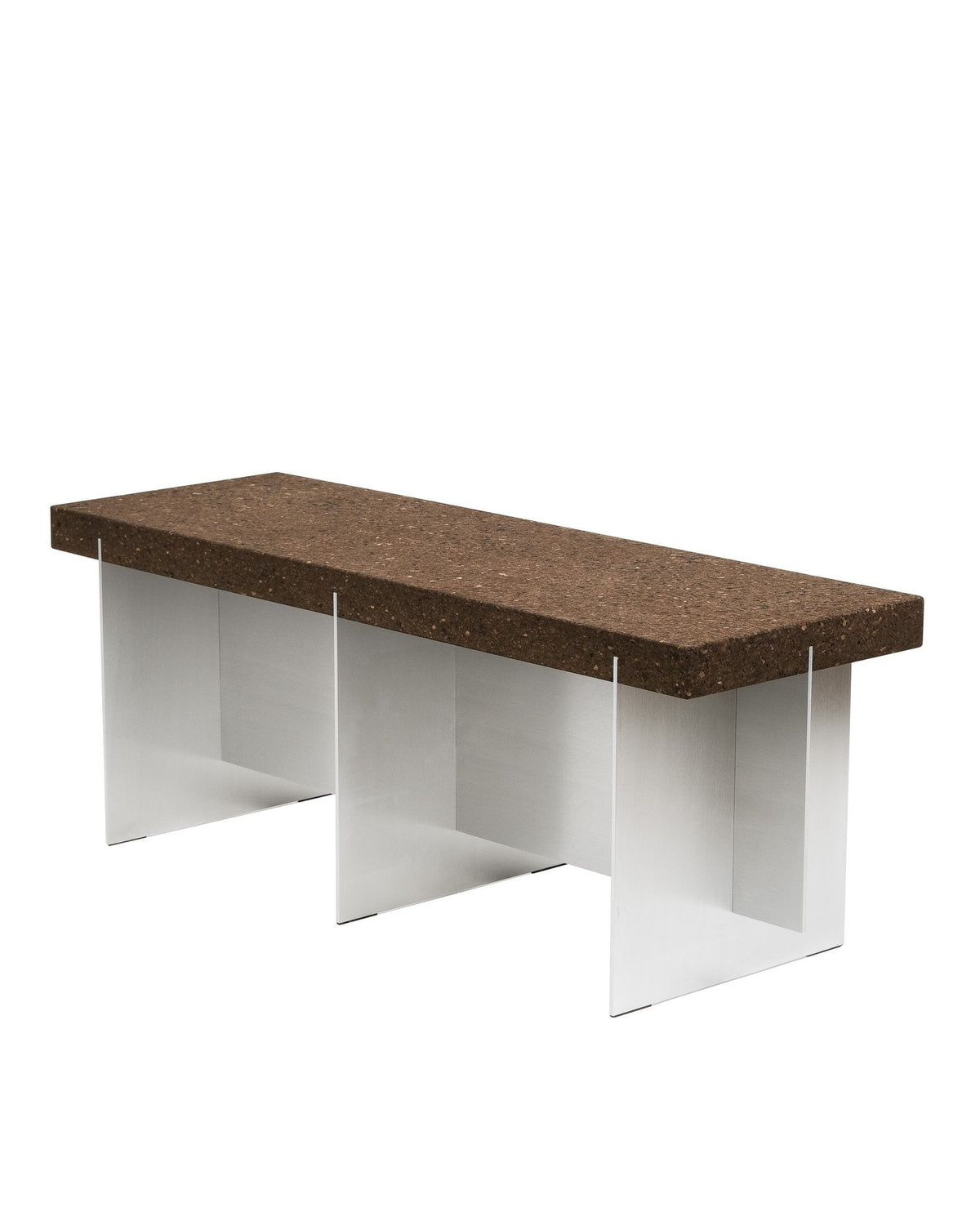
the most useful care instruction for a piece of collectible design is rarely a general rule about its material. it is the sentence the maker writes about the finish. two pieces in our shop are made of cork and still ask for different things; two ceramics fired at high temperature turn out to be a bowl for the dishwasher and a sculpture that should not see water. so this guide starts with the surface, and with what each studio says about it.
know the surface before you clean it
the finish is the layer that meets your hand, your cloth and whatever gets spilled: raw material, oil, lacquer, glaze. it decides what a piece tolerates. where a studio publishes care notes, they are the instruction that counts. where it publishes none, the careful answer is to ask before trying anything.
cork: natural and expanded
the cork-x bench by robert megel sets a seat of portuguese natural cork on a laser-cut aluminium frame. the studio describes the cork as durable and wipeable, without sealing. the bench comes with a care oil, and that oil is for the metal only: megel's instruction is to rub it into the aluminium parts, wipe off the excess with a soft cotton cloth, and not to use it on the cork. raw aluminium develops a patina over time and its gloss changes; the oil slows that down.
marcello by mattina moderna is expanded black cork on a wooden structure. the granules are expanded with water vapour and bound by the cork's own resin, with nothing added. the studio does not publish care notes. the closest published reference is the technical manual of apcor, the portuguese cork association, written for cork floor and wall coverings rather than for furniture. it advises against permanent direct sunlight, which tends to discolour cork, says cork tolerates water as long as the contact is not constant or prolonged, and recommends cleaning with a vacuum and a mop that is only slightly damp.
wood: oiled, then lacquered
the pine grid shelf by dot objects is pine plywood oiled by hand with pigmented linseed oil, a process the studio spreads over two weeks. what decides the care is the step after: the studio also treats its wooden pieces with a lacquer polish, and its care page handles the shelf as a lacquered surface. weekly dusting with a soft, dry cloth is usually all it needs. spills are wiped up promptly with a soft, damp cloth, with a mild detergent if necessary, and the surface is dried thoroughly. no abrasive cleaners or scouring pads, coasters under drinks, nothing hot placed directly on it, and enough airflow if it stands near a radiator. re-oiling is not part of the studio's care notes.
ceramic: glazed for use, or made as sculpture
the konische schale by atelier von ehren is stoneware, glazed inside and out and fired at 1220 °C. according to the studio, the high firing makes its bowls watertight, robust and suited to everyday use, and the care fits in one line: dishwasher safe. the bowls are meant for food or as a place to put things down.
in a marbling dream #2 by vale ro is handbuilt high-temperature stoneware, worked with oxides and a combination of glazes. glaze alone does not make a piece for use. vale ro's terms say a work is suited to holding water, to food or to another function only where its own description says so, and this piece's description does not. it is a sculpture, and water, food and the dishwasher stay away from it.
movement phase 1 by catalin filip is black vulcan stoneware, left unglazed with a raw, granular finish. porous ceramic takes up water, which is why studios glaze the surfaces that should stay dry. catalin filip publishes no care notes for the piece.
when the studio says nothing
the tetris candle holder by studio von schoenebeck is solid beech, burned in the japanese shou sugi ban technique, with red paint and metal inserts. the studio does not publish care notes for it either. for this piece, for the two ceramics above and for anything else in the shop, the way is the same: write to us before you clean, oil or wax, and we ask the studio. their answer is the care instruction.