
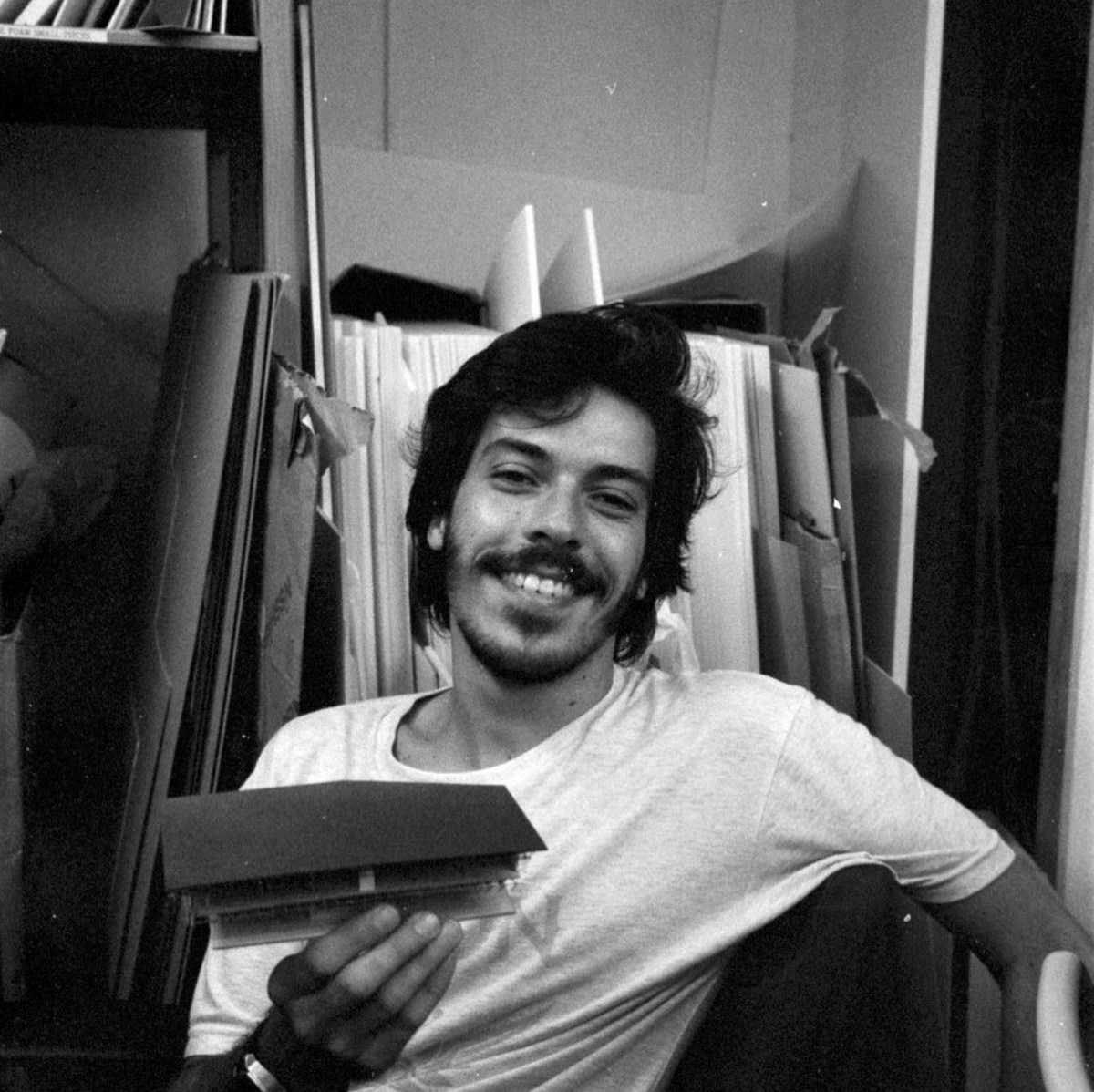
the seven joão bragança sculptures listed on the shop right now — scala rossa, baltazar, blimunda among them — are not sitting in a warehouse. they are in his studio, where they were made, and they stay there until someone buys one. only then does a piece get wrapped, insured and shipped, directly from him to the collector. nothing moves before someone has committed to it. that, in one sentence, is how we sell: on commission. some call it consignment, but nothing is consigned to us — no piece is lent, sent or stored at the gallery.
 scala rossa, joão bragança — made, stored and shipped from the studio; listed at spazio until the day it sells.
the word sounds more complicated than the arrangement is. you, the designer, keep ownership of a piece until it sells. you produce it — or already have it, no new work required — and you ship it, insured, directly to whoever bought it. we do the rest: a listing that's actually findable, translated copy, the payment, customer questions answered in real time, returns handled, and getting the piece in front of people who are looking to buy design, through the shop, google shopping, and our own audience. no stock changes hands before a sale. nobody on either side is guessing how many units to make.
curated means someone said yes
one thing worth separating first, because the word “gallery” covers very different businesses online. a lot of platforms work on a subscription: designers pay a monthly fee or a listing charge, and whoever pays is shown. spazio doesn't work that way. nobody can pay to be listed here — there is no fee that opens the door. every piece goes through curation: you propose work, we look at it, and it joins the collection because we want to stand behind it. that's slower than taking everyone, and it's the point — a shelf where everything was chosen is what makes a collector trust the next piece they see on it.
what a gallery actually does for its cut
industry standard for a gallery's commission sits around 40 to 50 percent of retail. spazio's own terms are simpler than that range suggests — a flat commission, no fees of any kind: no membership, no listing costs, no exclusivity. we share the exact numbers with every designer we invite. wherever the percentage sits, it's worth being specific about what it pays for: seo and search terms that actually get a piece found, sizing and material information written properly, a checkout that works without a developer on your end, insurance during transit, and — the part that's hardest to put a number on — context. a marble piece by moreno ratti sitting next to alberto meda or denis santachiara reads differently than the same piece alone on instagram. some platforms advertise a lower cut but add listing fees, payment processing fees and promotion fees on top; add them up and the gap to a flat percentage is usually smaller than the homepage makes it look.
the other half of the arrangement: you set the retail price, we advise but don't override it, and we ask for price parity — the same piece doesn't sell cheaper somewhere else. that protects the shelf, but it protects your other channels too, since a customer who finds a piece discounted anywhere undercuts every relationship you have at once, not just ours.
from show to shelf
some of the designers listed now came through the physical years. gregory borlein first showed in the munich space as one of the art-academy students in a group exhibition; today two of his sculptures are listed under the same terms as everyone else's. joão bragança learned to work cardboard in kengo kuma's tokyo studio years before a single piece of his reached munich. and new facettes arrived by email — no show, no prior contact. the route in doesn't matter: you propose the pieces, we curate the final selection together, and what we agree on goes up.
the practical parts
shipping within the eu is calculated into the retail price, so it reads as included at checkout; furniture and anything needing freight is priced separately and paid by the buyer directly. outside the eu we handle it case by case. payout comes by bank transfer once the buyer's return window has closed, with a statement showing exactly what sold and when. the arrangement itself is open-ended: either side can end it with reasonable notice, and we sit down together every six months to review what's listed rather than locking anyone into anything longer.
if you're weighing selling on commission against wholesale — selling stock outright to a gallery upfront, at a lower price, for immediate payment — the trade-off is straightforward. wholesale gets you paid before anything sells, but the buyer then owns the risk of an unsold piece and discounts to move it, which is rarely good for how your work is perceived. selling on commission keeps the retail price higher and the risk with the maker until the moment of sale, in exchange for waiting for that sale. for most of the designers we work with — small runs, made to order, or one of a kind — that trade makes more sense than tying up capital in stock nobody has asked for yet.
to start: send 3–5 pieces you'd propose, with materials, dimensions, a retail price idea, and lead time if it's made to order — by mail to nino@thespaz.io. the designers already selling this way are on the designers page.
we are open for submissions — apply to spazio.
we write about pieces, designers and how collecting works once or twice a month — the newsletter signup is at the bottom of this page.