
In Poland, the Kilim Was a Medium for Modern Design. Przemek Cepak's Splot Wants It to Be One Again
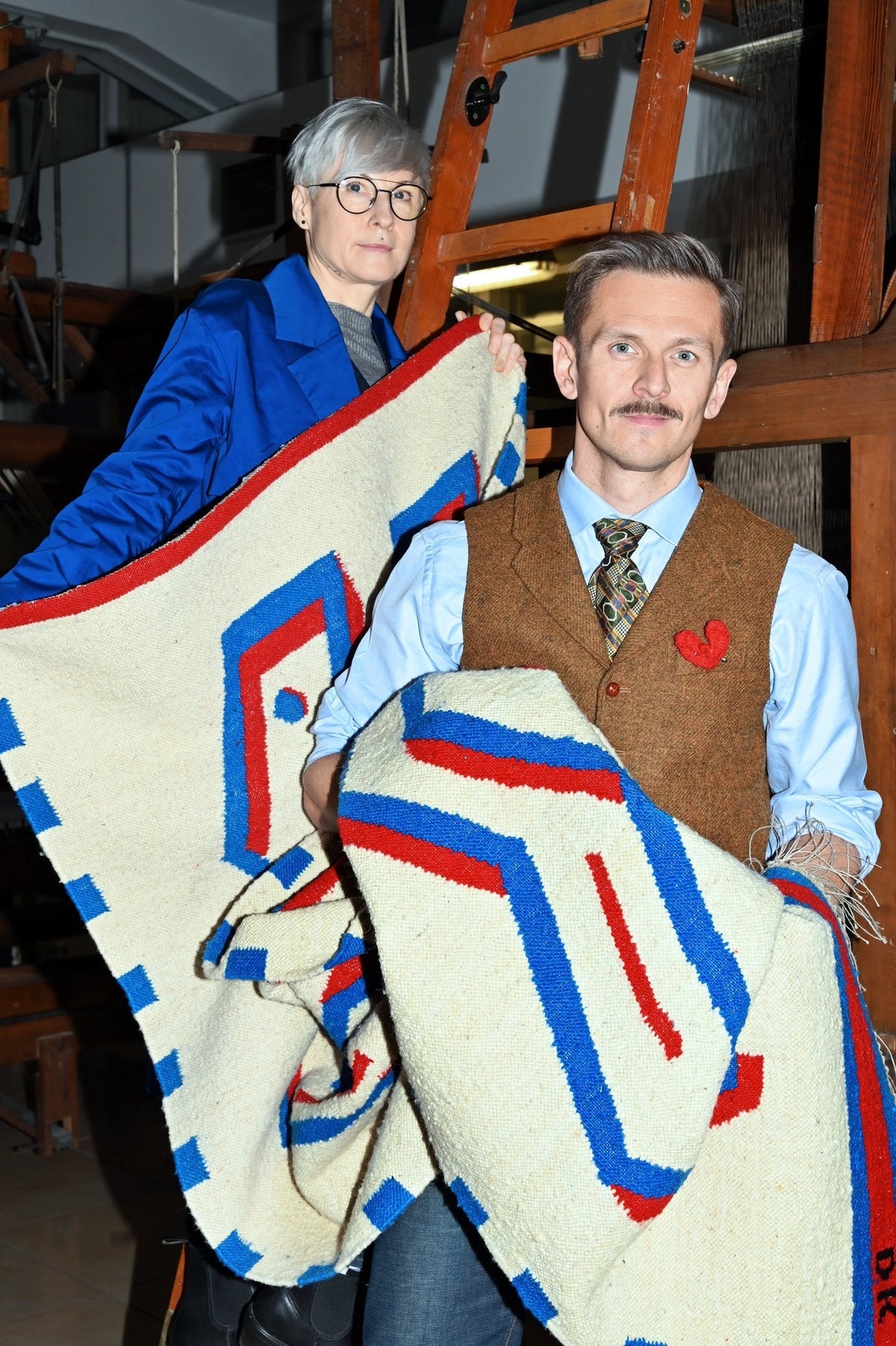
Przemek Cepak came to kilims through Polish design history, and above all through what the country's artists and craftspeople achieved in the first half of the twentieth century. Modernists such as Stanisław Wyspiański and Zofia Stryjeńska often worked in the medium, and in the 1920s and '30s kilims decorated grand public buildings and private modernist villas. After the war they were made in many of the workshops of Cepelia, the union of folk and artistic handicraft cooperatives, and with time the craft was nearly forgotten. “I was struck by how naturally traditional craftsmanship and modernist ideas came together in these textiles, and how little attention this remarkable heritage was receiving,” says Cepak.
He founded Splot (the word is Polish for a weave) in Warsaw in 2020. “When, with my dream of modern Polish kilims, I came to the weavers of the last operating Cooperative in Bobowa, I knew that together we would do something special,” he writes on Splot's website. His ambition, he says, “was not simply to reproduce historical designs, but to reconnect this tradition with contemporary interiors and contemporary designers. I wanted to demonstrate that the kilim could once again become a relevant and exciting medium for artistic expression, while providing meaningful work for the skilled weavers who have preserved this extraordinary craft.”
Splot's kilims are woven by hand in two places, on traditional, non-automated looms, and a square metre takes about a week of work. In Bobowa, near Kraków, where weaving goes back more than seventy years, the warp is linen and much of the wool hand-spun. The studio compares each kilim made there to a loaf of traditional bread, “made from the same ingredients and by the same skilled artisans, yet each one comes out unique.” In Hlyniany, some fifty kilometres east of Lviv in western Ukraine, kilims were woven from the middle of the nineteenth century. Splot works there with the Ukrainian Zena Workshops, mostly on designs from the 1920s and '30s. The thinner, recycled Polish wool they use can follow the detail of old compositions, and the cotton warp keeps the kilims soft and light.
Splot makes two kinds of kilim: re-editions of historical textiles from the last century and new patterns by contemporary artists and designers. (Carolina chose eight for spazio, from both.) Among the re-editions, 'Herd' was designed in 1964 by Maria Bujakowa (1901–1985). Her tapestry 'Jan III Sobieski' had won the Grand Prix at the world exhibition in Paris in 1937, and after the war she was the leading designer of the Zakopane Pattern Workshops. Before Splot's re-edition, only one 'Herd' had been woven, and it is in the collection of the Central Museum of Textiles in Łódź. The new edition exists thanks to her daughter, Magdalena Lenczowska, the Tatra Museum in Zakopane and the weavers of Bobowa.
'Five of Cups' goes back further, to a design of the 1930s whose author is unknown, and is newly woven in Hlyniany. “The authorship or even the name of many pre-war fabrics will remain forever undetermined,” Splot writes. This one was named almost a hundred years later, after the five cups in its pattern, and the studio's page asks: “What do you see in it and what would you call it?”
To Cepak, the new designs matter just as much as the re-editions. Edgar Bąk, a graphic designer who teaches at the School of Form in Poznań, reduced his kilim 'Chaos' to two colours, and Splot's description recalls that for the ancient Greeks, chaos was the primordial state of the world. The Silesian Museum in Katowice bought a 'Chaos' from the first edition for its collection of contemporary design, and the Central Museum of Textiles in Łódź bought one too. When that edition sold out, the design went on as 'System Chaos', with the figures arranged differently on every kilim. Bąk's 'Cosmos', in the studio's words “a reconfiguration of chaos”, is in the Silesian Museum's collection as well.
Zofia Strumiłło-Sukiennik, an interior architect and designer who trained at the Academy of Fine Arts in Warsaw, studied the wooden architecture of Podlasie, in north-eastern Poland, for 'Large Veranda'. In her design the modular form of a traditional country veranda breaks apart as if after a computer glitch, which sounds less far-fetched once Splot points out that the loom and the computer run on the same binary principle, zeros and ones. Part of the kilim's yarn was spun on a spinning wheel from the wool of Podhale, the highlands below the Tatras; the rest is leftover yarn of different origins from the former cooperative in Bobowa, only some of it hand-spun.
Antonina Turnau Kondratowa, born and raised in Kraków, makes kimonos as well as kilims, and Splot introduces her as “a Polish artist by education, a tennis player by passion”. Her 'The City', whose lines the studio likens to the skyscrapers of a great metropolis, is woven in Hlyniany. Dominika Krogulska-Czekalska's 'Wacław' is a homage to the drawings of Wacław Szpakowski. “There is something optimistic in linearity, and consistency in the continuity of lines,” she writes, and calls the kilim “a memory of awe”, felt while running a finger and an eye along a line drawn by Szpakowski and listening to Adam Bałdych on the violin. 'Wacław' is now in the collection of the Central Museum of Textiles in Łódź, which also holds the only 'Herd' woven before Splot's re-edition.
Przemek Cepak and Dominika Krogulska-Czekalska. Photograph: Zbyszek Olszyna.


herd kilim
Dhs. 18,693.00splot
made to order


uranos kilim
Dhs. 18,693.00splot
made to order


cosmos kilim
Dhs. 18,693.00splot
made to order

five of cups kilim
Dhs. 18,693.00splot


large veranda kilim
Dhs. 18,693.00splot
made to order


wacław kilim
Dhs. 18,693.00splot


the city kilim
Dhs. 18,693.00splot


system chaos kilim
Dhs. 18,693.00splot
made to order
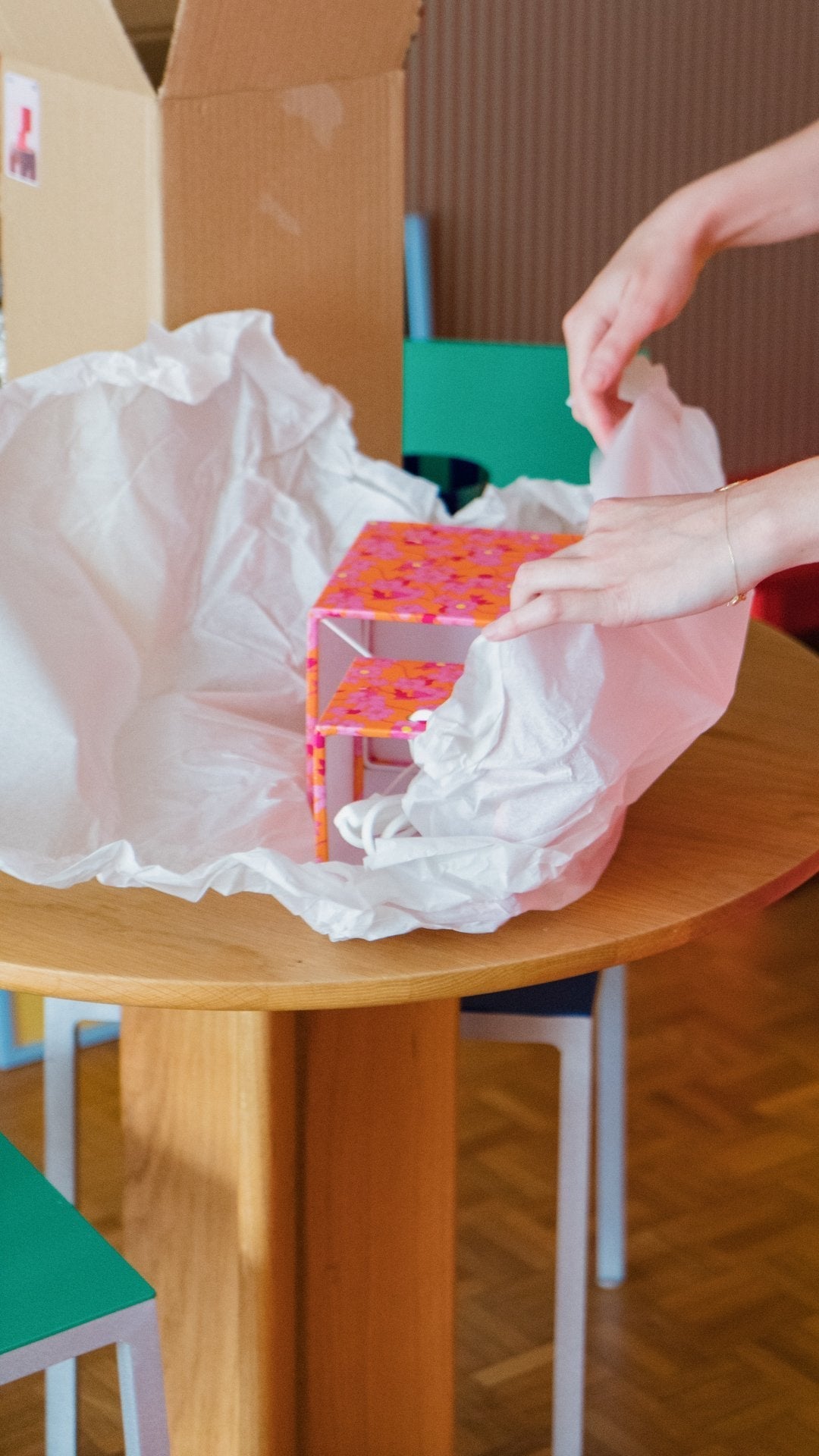
Mattina Moderna: Lamps from the Riviera, Made Slowly
A mother and daughter in Nice who began by thrifting vintage lamps on the Riviera and now make their own, with hand-painted earthenware bases from Portugal...
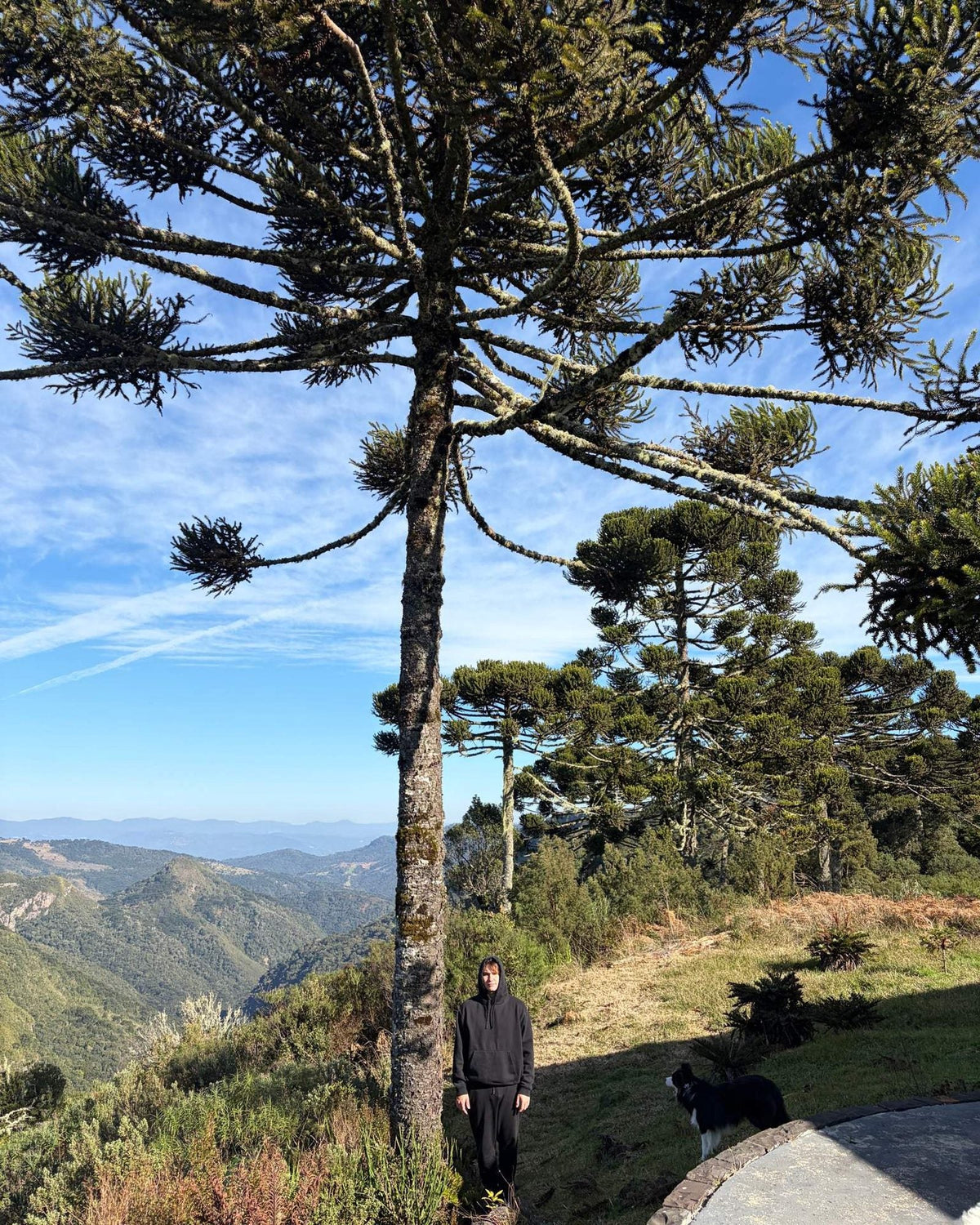
Matheus De Toni Writes What Exists While It Is
A writer on the coast of Portugal who treats writing as a way of paying attention, and a poem from his 2025 collection Poesia de curta...
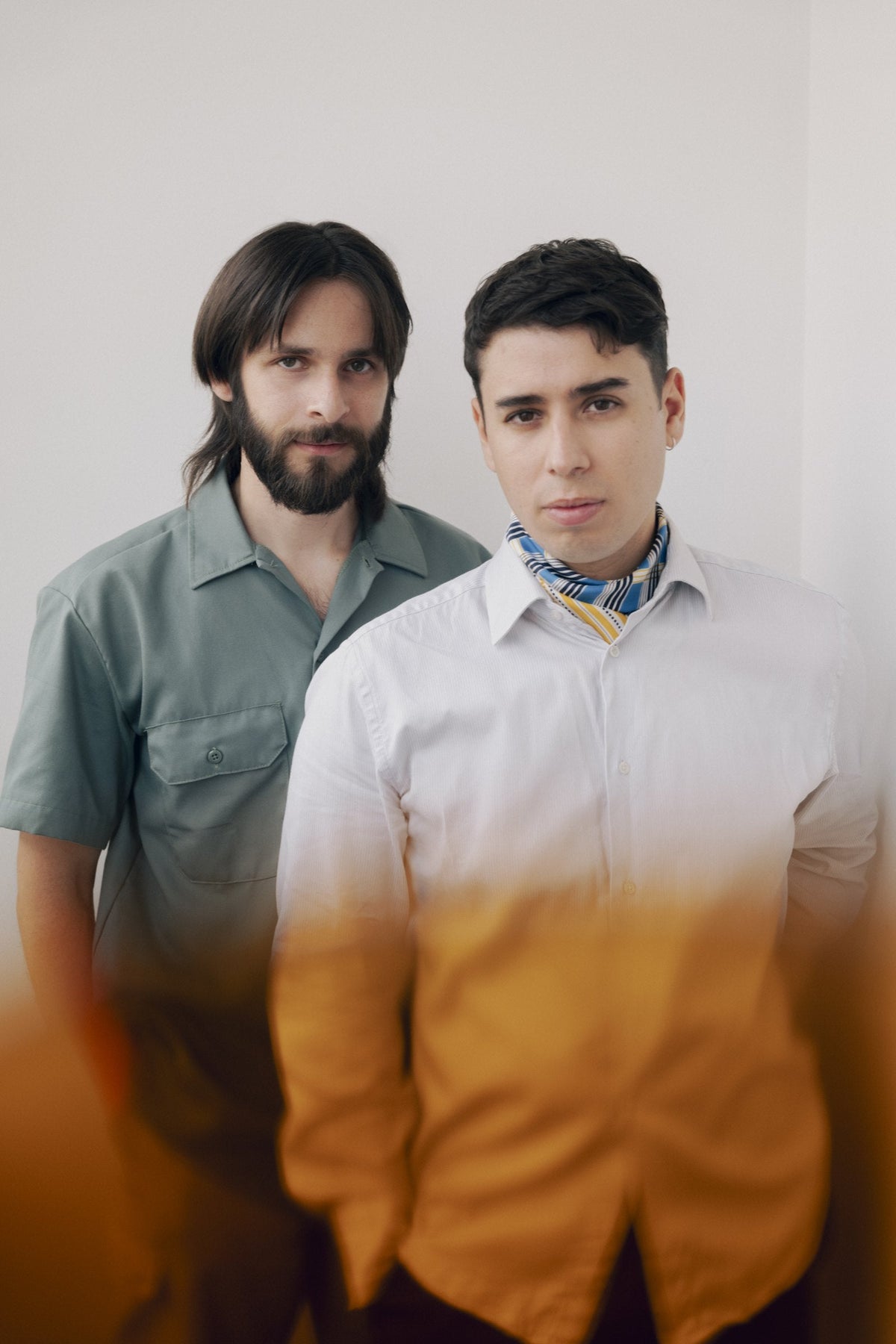
behaghelfoiny: a print that follows the fold
antoine behaghel and alexis foiny print aluminium flat and fold it into furniture: the 'aluplié chair' from their paris studio, in an edition of 8.