
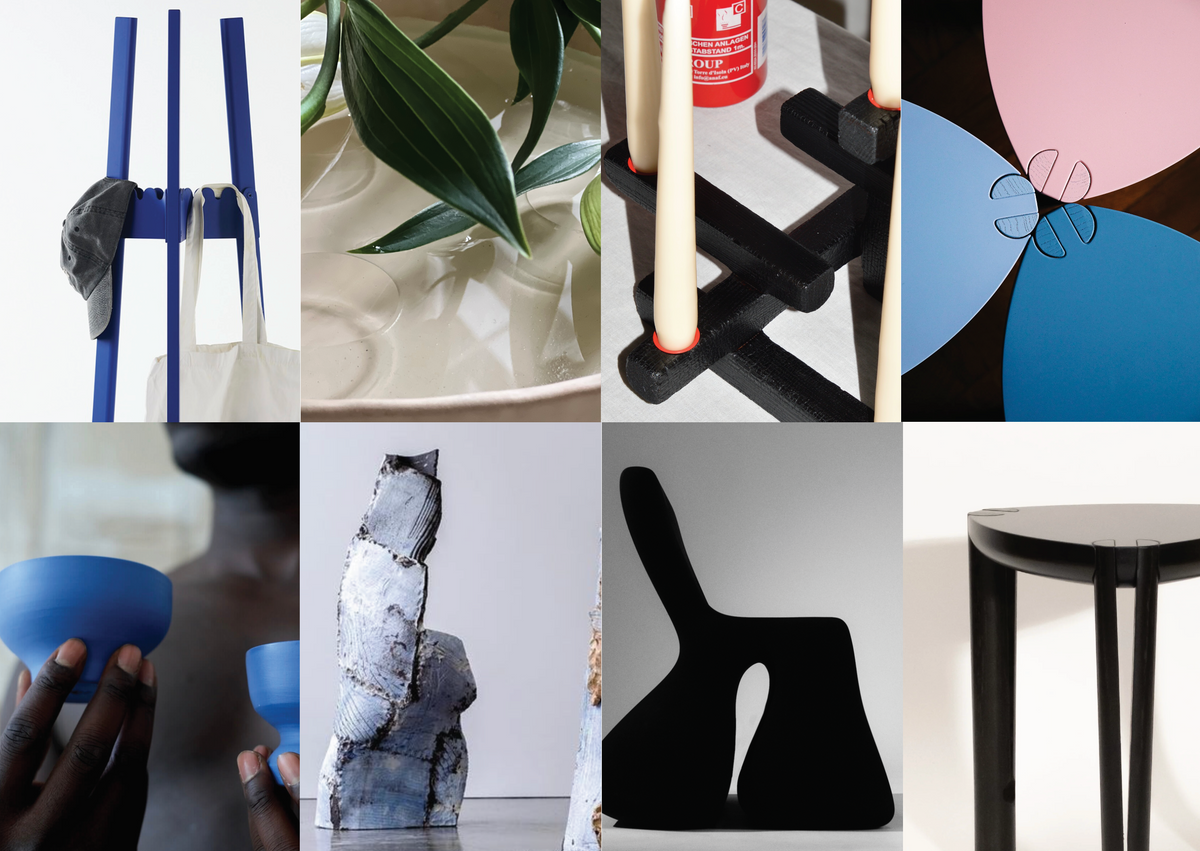
when joão bragança studied architecture, cardboard was what you built models from — cheap, fast, disposable. then he spent time in tokyo, in the studio of the architect kengo kuma, and watched what japanese craftspeople did with the same material. “the japanese use handcraft techniques of incomparable precision,” he said later. the wall sculptures he makes today, and which we showed at spazio over the winter of 2021, are cardboard — the throwaway material of his student years, taken seriously for two more decades until it could carry light and shadow. one of them exists exactly once. that, in one object, is collectible design.
where the term comes from
design has been collected for as long as it has existed, but the market we know today has a rough birth date. in 1981 the memphis group showed furniture in milan that behaved like art — loud, limited, impossible to justify on function alone. in the decades after, auction houses began selling twentieth-century furniture the way they sold paintings, and in 2005 a fair opened in basel called design miami, which gave the whole field a stage of its own. somewhere in the 2010s the phrase collectible design settled in: functional objects — furniture, lighting, vessels — made in unique pieces or small editions, bought as much for authorship as for use.
the interesting part is what happened next: the field stopped being exclusive to basel and paris. digital fabrication made small series viable for independent studios — cyrcus, the milan platform we hosted in 2022, designs and produces everything with digital tools and showed at salone del mobile before bringing their work to munich. online galleries made the audience international. today a serious collection can begin with an artist-made cup, not an auction paddle.
unique piece, edition, made to order
three phrases do most of the work on any collectible design listing, ours included.
a unique piece exists once. camilla richter's dichroic glass objects are built for a specific play of light and never repeated; when a bragança wall sculpture sells, that work is gone. uniqueness is also why provenance matters — gianna zanafredi, whose material paintings we showed in 2022, had exhibited at the venice biennale in 2011, and that history travels with every work.
an edition is a small, numbered series, usually signed. the nf1 stool by new facettes is numbered and signed in berlin; moreno ratti cuts his marble works in carrara in limited runs. small numbers are not marketing — they are what a one- or two-person studio can physically make while keeping every piece to standard. an honest edition size, stated on the object, is what separates collectible design from a product line.
a made to order piece is produced when you order it, with the lead time stated up front. the puffa m4 armchair is made this way — there is no warehouse, just a studio that starts working. you wait longer and get a piece that was never in stock anywhere.
what the material knows
the designers we work with tend to let the material lead. benedikt peirotén of studio peipei, who showed at spazio in 2022, melts glass from the ash of wood-fired pizza ovens, crushed shells from fish restaurants, and sand — “glass is a delicate structure that reacts to every smallest ingredient,” as he puts it, which is why no two of his vessels match. ronen kadushin, whose flat knot bowl we carry, helped invent open design in the 2000s — he publishes his cutting files openly, and the value of a signed piece lies in it being made and finished by him. denis santachiara, born 1950 in reggio emilia and part of the italian neo-avantgarde that followed memphis, has spent a career smuggling poetry into industrial techniques. alberto meda, born 1945, came to design as a mechanical engineer and builds the way engineers dream. when you buy from studios like these, the object arrives with its thinking attached.
why collect — honestly
the honest answer is that you live with it. a collectible chair carries you through breakfast; a numbered bowl holds your keys. objects with authorship make a home specific in a way styling never quite does. there is also value: work by independent designers can appreciate as a career grows, and good pieces hold their worth far better than mass furniture. but anyone who promises returns is selling something else. the collectors who enjoy this field longest buy what they want to touch every day — appreciation, when it comes, is a bonus.
keeping pieces well
most collectible design wants very little: oiled wood likes a fresh coat of hard wax oil once a year and hates radiators; marble is porous, so wine and lemon juice are its enemies — wipe, don't soak; hand-blown glass goes nowhere near a dishwasher; textiles and upholstery mostly want shade, because sunlight fades honest materials first. if a piece comes with care notes from the studio — ours do on request — keep them with the certificate.
starting without a gallery budget
you do not need four figures. artist-made tableware, small objects and lighting by serious designers start under €300 — maria cepissakova's hand-turned cups or a numbered flat knot bowl are real collection starters, not merchandise. at spazio everything works on consignment: designers propose, we curate, and each piece ships insured from the studio that made it, with eu parcel shipping already in the price. how the rest works — returns, freight, visits — is in the faq. the collection itself is here.
we are open for submissions — apply to spazio.