
Asked for a Portrait, Gast Studio Sent Us Pictures of the Computer Where Every Piece Is Designed
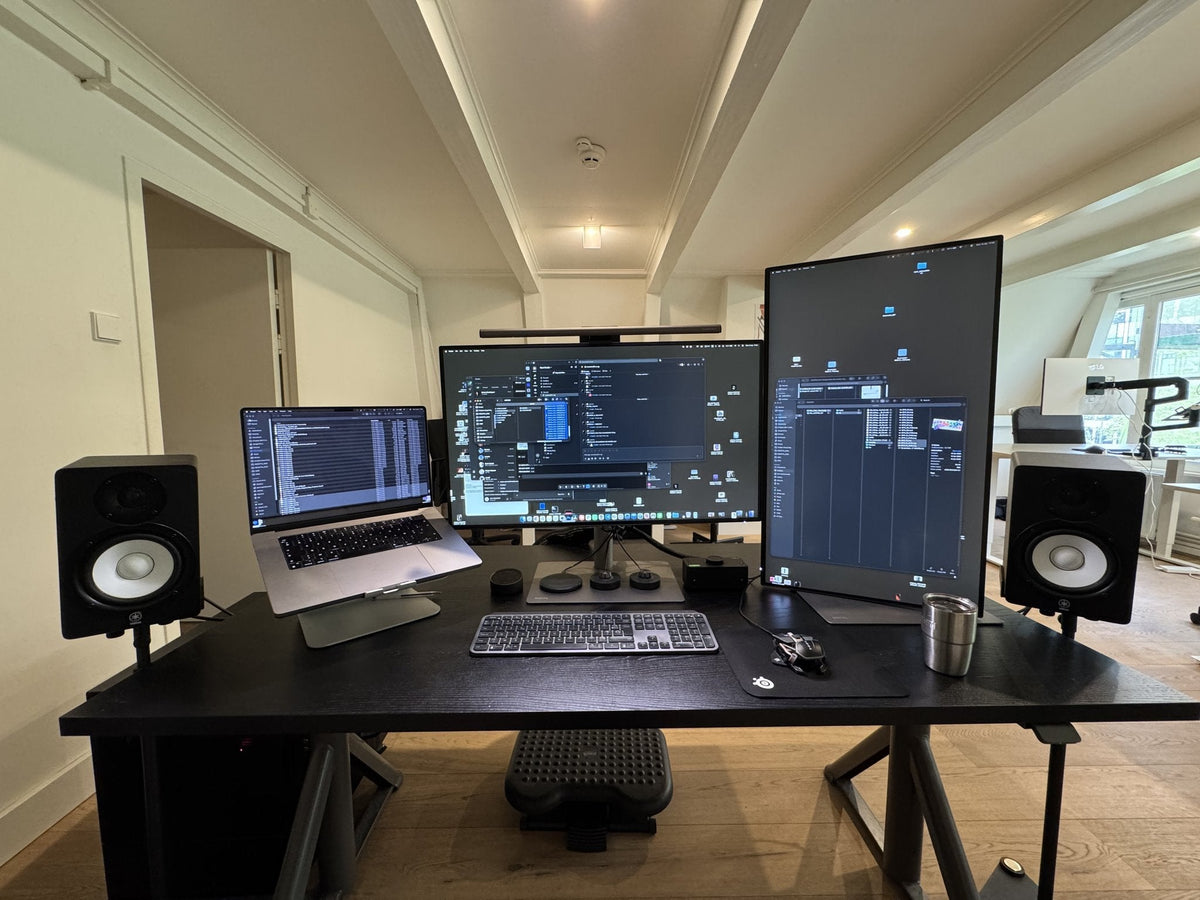
When we asked Gast Studio for a portrait to run in the first issue of our magazine, the answer came back from Amsterdam that the studio keeps itself faceless and doesn't share portraits. Every Gast piece is designed on screen, the studio wrote, so the closest thing to a portrait is the computer workstation itself. Three days later fourteen photographs of the workstation arrived, and one of them is at the top of this page.
Most of Gast Studio's work happens on screen. Its foundation, seven years in, is CGI: for luxury brands it directs and produces images and films, with a core team of CGI and AI artists, kept small on purpose, who bring in specialists for each project. Alongside the client work, under the name Gast.obj, the studio designs vases and bowls of its own, and its website introduces them in one line: “Objects that started on screen.” They have been exhibited at Salone del Mobile in Milan and at the Saatchi Gallery in London. (Five of them are on spazio.)

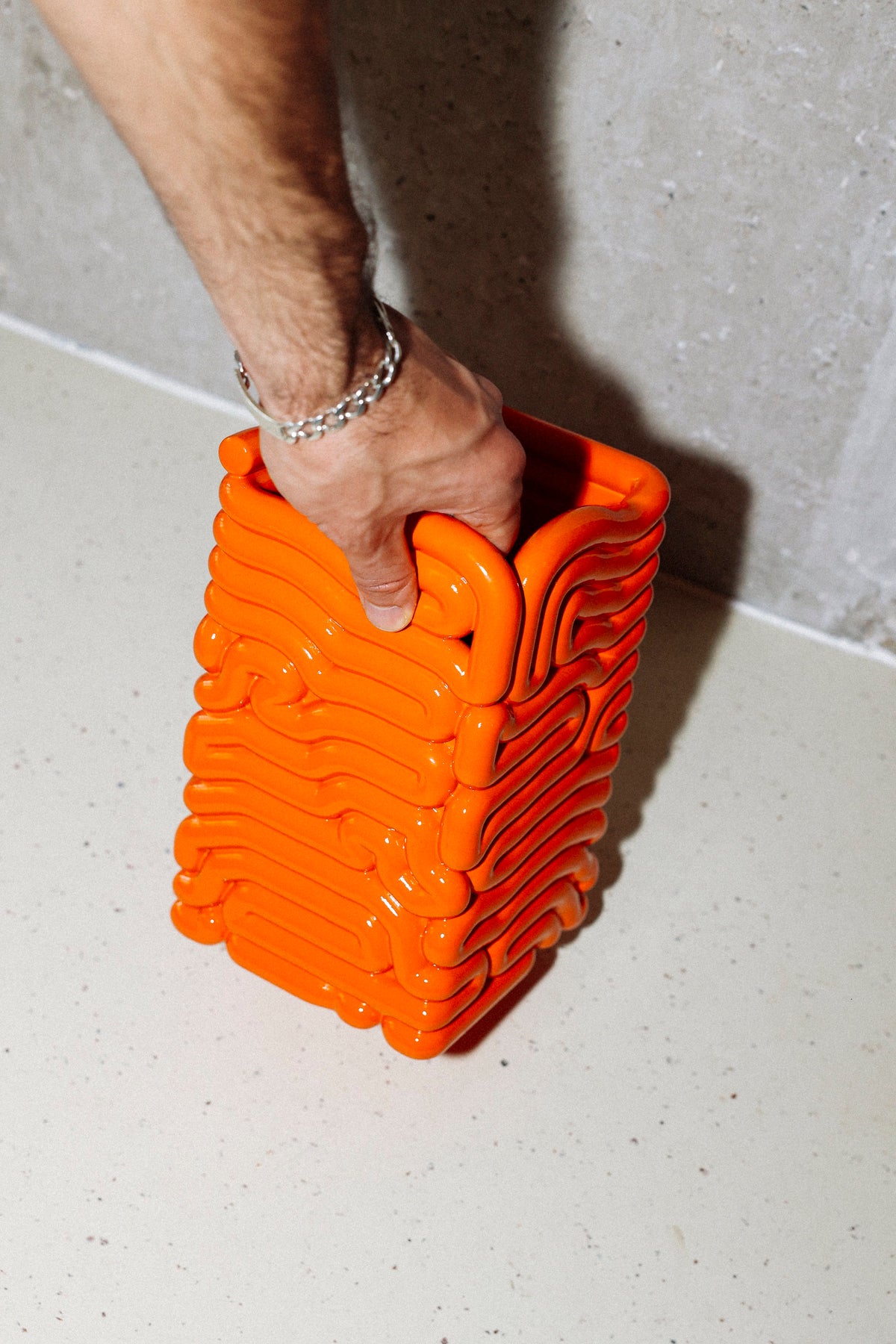
Of the five, the 'Noodle vase' shows that most plainly. “A shape no one drew,” the studio calls it. “We simulated it.” It began as a single, very long noodle, released into a physics simulation and left to coil and fold onto itself until it found a form. In a simulation the designer sets up the conditions and the software works out the rest, gravity and collision, frame by frame. The vase is made from that form in resin and painted by hand.
The 'Puffer vase' was sculpted instead, “the way we sculpt for CGI”, as the studio says, and made in ABS, a hard plastic, with a mirror chrome finish. In a rendering a surface can look like anything without being it, and the Puffer brings that trick into the room: it looks soft enough to give under a finger, and it stays solid. The 'Puffer vase II' came after it, painted blue or in chrome, in two sizes.
The 'Twigs bowl' is the one piece of the five that begins outside the computer, with real twigs. They were digitised and reshaped by algorithm before being made again in ABS, and in chrome, the studio writes, the bowl becomes “a relic of nature rendered hyperreal”. It also comes in matte black.

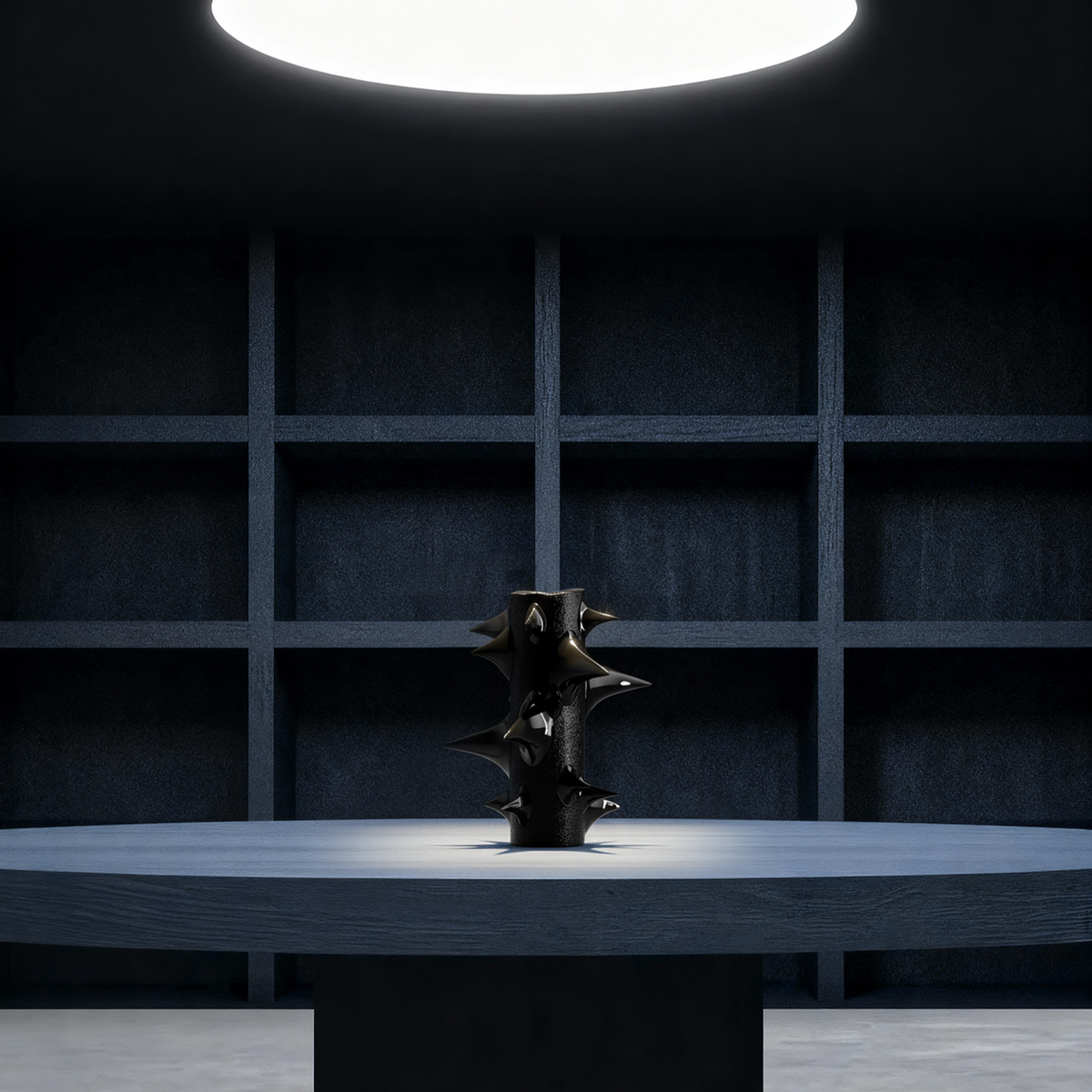
The 'Stem vase', whose spikes take after natural thorns, is finished with paint and high-gloss varnish. When we asked for film from the workshop for our Instagram, there wasn't any. For the studio the magic lives at both ends, in the simulation on screen and in the object in the hand, and what happens in between stays off camera, for now.
Workstation: Gast Studio.





In Donostia, Joshua Linacisoro Welds an Incense Holder to Keep His Hands in Practice
Joshua Linacisoro works between Donostia and Barcelona, on objects made for small daily ceremonies. A portrait from the first issue of our magazine.

In Studio von Schoenebeck's Chairs Named After Bulgakov's Lovers, Margarita Is the Sturdier One
Magdalena Shterianova's favourite novel became a pair of chairs in raw aluminium. How Studio von Schoenebeck in Munich builds its stories into aluminium and charred beech....

Mina Wright Came to Clay From Painting, and Named a Vase After a Rococo Dress
Mina Wright came to clay from painting. In Barcelona she builds and paints her vases by hand, and has named one of them after a rococo...