
For Lucas Gutierrez, a Digital Artist in Berlin, 'Light Mode' and 'Dark Mode' Are Made of Thread
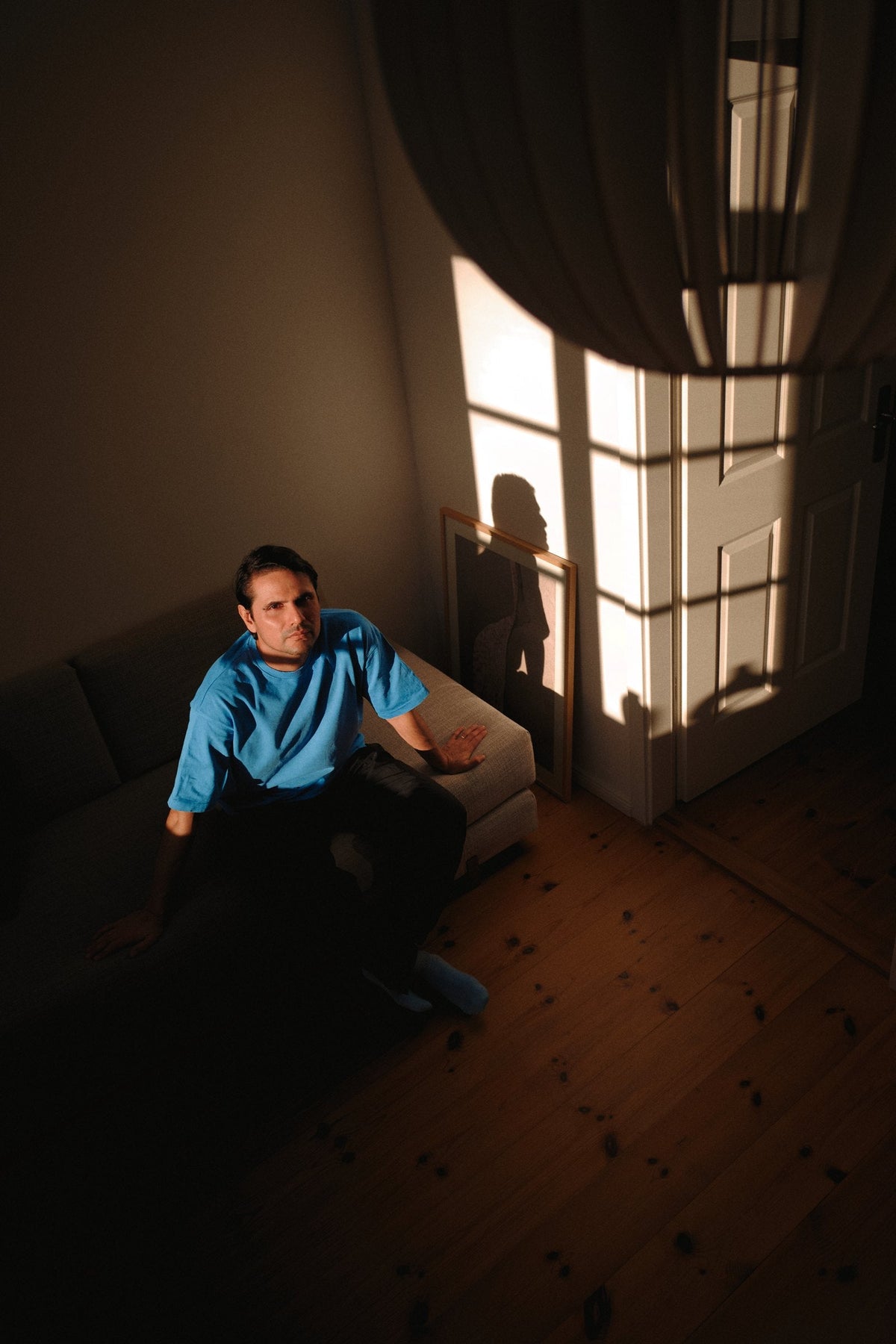
Lucas Gutierrez is a digital artist in Berlin, and much of his work needs a screen or a projector to be seen, from images generated in real time to films made for the domes of planetariums. In 2023 he began a series of jacquard tapestries, and four of its seven designs carry the name of a display setting, 'Light Mode' or 'Dark Mode'.
Gutierrez was born in 1985 in Belén, in the Argentine province of Catamarca, and had his first solo exhibitions there, in 2004 and 2005. He trained as an industrial designer at the Universidad Nacional de Córdoba, where his final thesis, in 2012, was on the equipment and techniques of the potter's wheel used in ceramics education. His subject is digital culture; he lectures and runs workshops on it and has taught at the Berlin University of the Arts and at the Weißensee Academy of Art. In 2025 his fulldome film XYZ CRAFT premiered in a planetarium in Prague, and his list of screenings for 2026 includes Buenos Aires and Poland.
The tapestries are designed and developed in Berlin, woven in Italy on a jacquard loom, from acetate, viscose and polyester, and assembled back in Berlin. In a jacquard weave the picture is made by the yarns themselves, each colour brought to the surface wherever the design calls for it. Each tapestry is part of an edition of eight per design and comes with a certificate, stamped and dated.

He calls them a milestone in “the exploration of unconventional materials and non-digital techniques”. The screen theme carries through the collection, not only in the names. 'Light Mode 180', as the studio puts it, works with inverted background colours, moving away from the deep hues of its counterpart, 'Original'. 'Ceniza', which is Spanish for “ash”, is woven in monochrome.
“The numbers in the titles nod to the digital world the tapestries come from,” says Gutierrez. “They echo the way code and computing refer to values, versions and resolutions, which connects the pieces to the idea of algorithmic textures. The name 'Light Mode 180' does this most directly: it borrows the vocabulary of screens and software, and the number reads like a colour setting or a parameter rather than a date or a count.”
The studio uses a word for the weaving that, on a screen, would mean a fault. In a digital image, artifacts are the blocks and stripes compression leaves behind in a smooth gradient. Of the tapestries, the studio writes: “Meticulously machine-woven, yet infused with hand-touched details, every piece carries subtle variations and artifacts that amplify its uniqueness.”
'HEADS' is a sculpture in solid bronze, handmade in Berlin, and its finishing treatment gives each cast a surface of its own, so no two are alike. 'Tiny HEADS' takes the same form into a pendant, cast in solid silver by lost wax, and Gutierrez describes it as “a subtle balance between digital design and traditional craftsmanship”. (All seven tapestries, the bronze and the pendant are on spazio.)
This year he has taken a step further from the screen. He had held residencies in Lisbon and Braga before, and during one at Fisga, in Porto, he began working with Isilda Parente, a master embroiderer in Viana do Castelo, whom he credits as a collaborator on the work. I Will… Bordados is made in the manner of the lenços de namorados, the embroidered handkerchiefs that young women in the Minho once gave as love tokens, and carries sentences about artificial intelligence and about work lost to technology. The pieces are embroidered in her atelier, and each one takes weeks.
Portrait: Antonio Pedro.
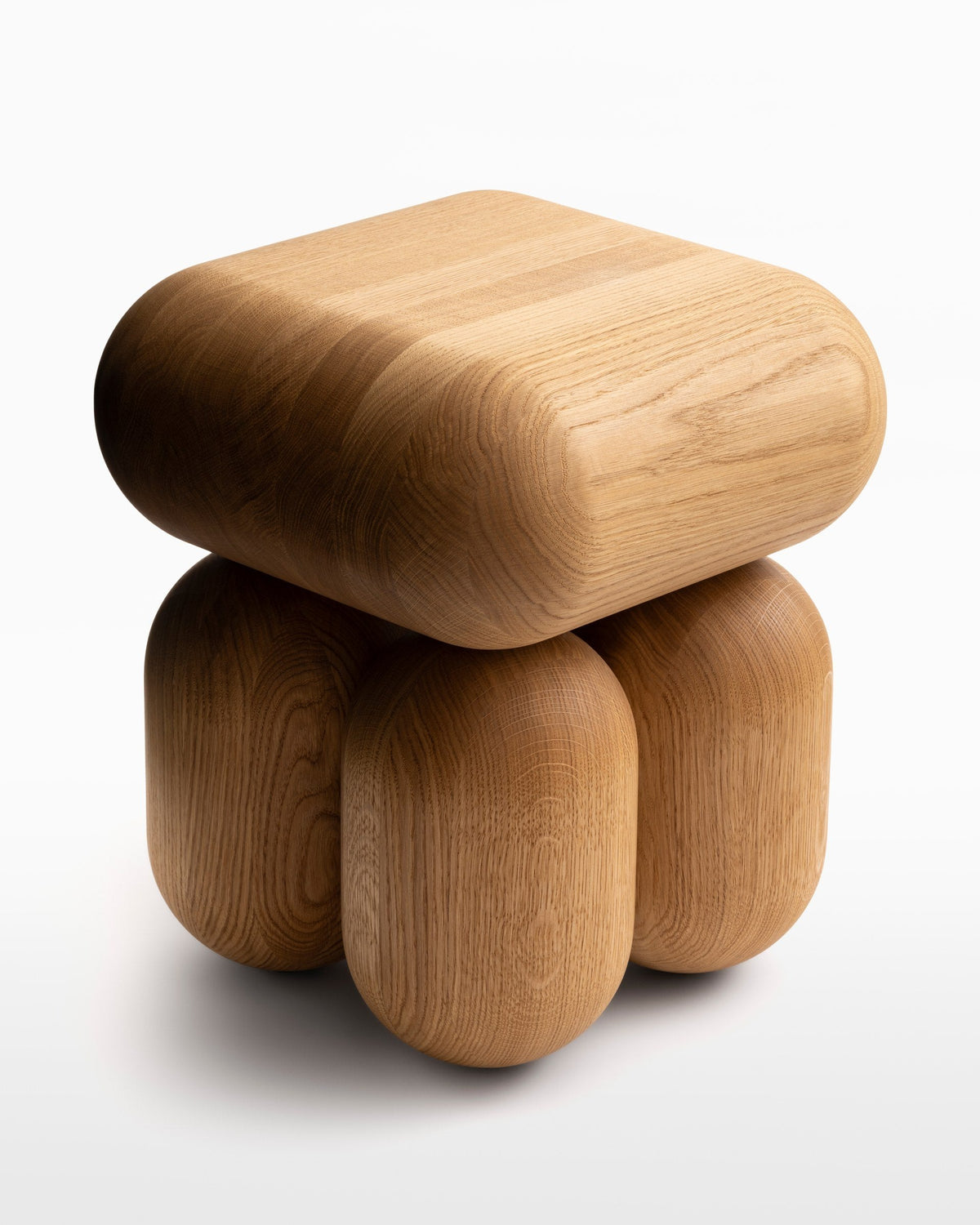
At New Facettes in Berlin, Max Kellermann and Sebastian Labis Make Solid Wood Look Almost Unreal
Two architects in Berlin make a stool in solid ash or oak that could pass for a rendering. A portrait of New Facettes from the first...

In Donostia, Joshua Linacisoro Welds an Incense Holder to Keep His Hands in Practice
Joshua Linacisoro works between Donostia and Barcelona, on objects made for small daily ceremonies. A portrait from the first issue of our magazine.

In Studio von Schoenebeck's Chairs Named After Bulgakov's Lovers, Margarita Is the Sturdier One
Magdalena Shterianova's favourite novel became a pair of chairs in raw aluminium. How Studio von Schoenebeck in Munich builds its stories into aluminium and charred beech....